Driving users away
When a user engages with the navigation of a website, they begin to build a mental model of the way the site is organized. The more choices they have increases their perception of how difficult it will be for them to understand how the site is structured and how difficult it will be to find what they’re looking for. When users perceive that achieving their goals will be difficult, they leave and find an easier website to navigate. At the same time, there needs be enough information for them to understand what will be available to them on the site. It's a fine balance.
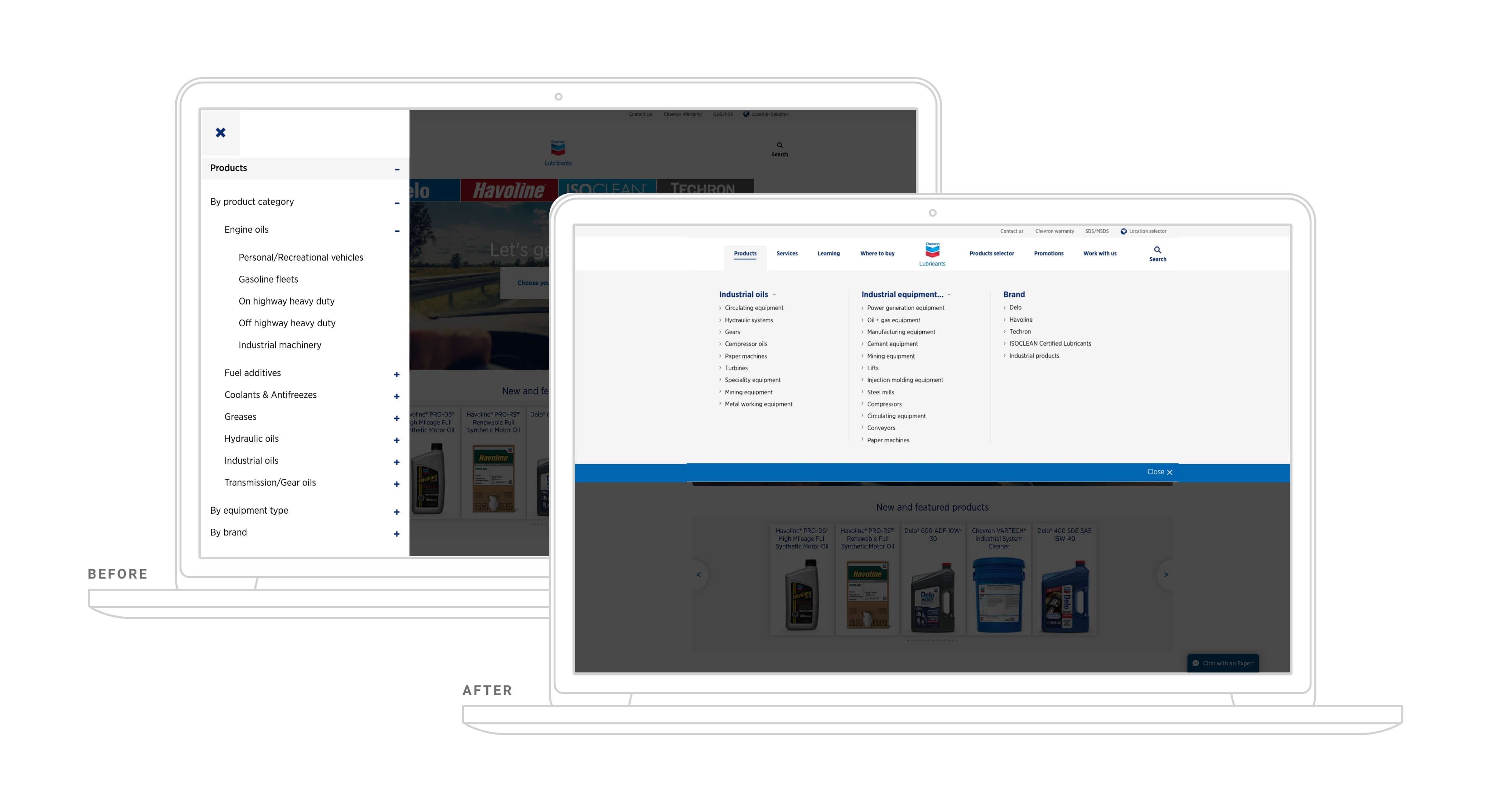
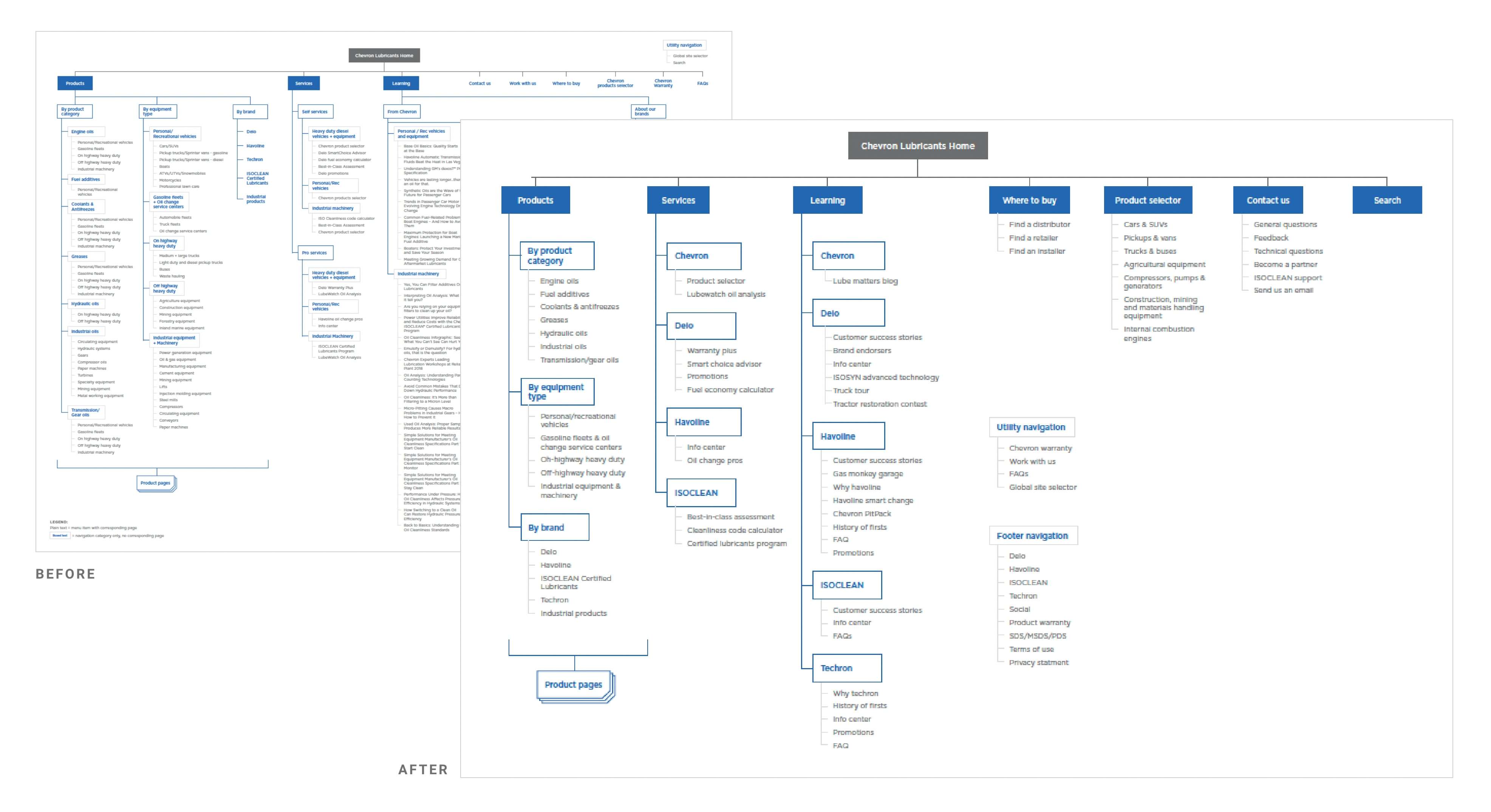
Chevron's original navigation solution contained four layers of information, 83 links in one dropdown alone, inconsistent heading designs, duplicate links, and an left-hand-side menu, all hidden behind a hamburger icon on tablet and desktop devices that reduced discoverability.
Main solution recommendations
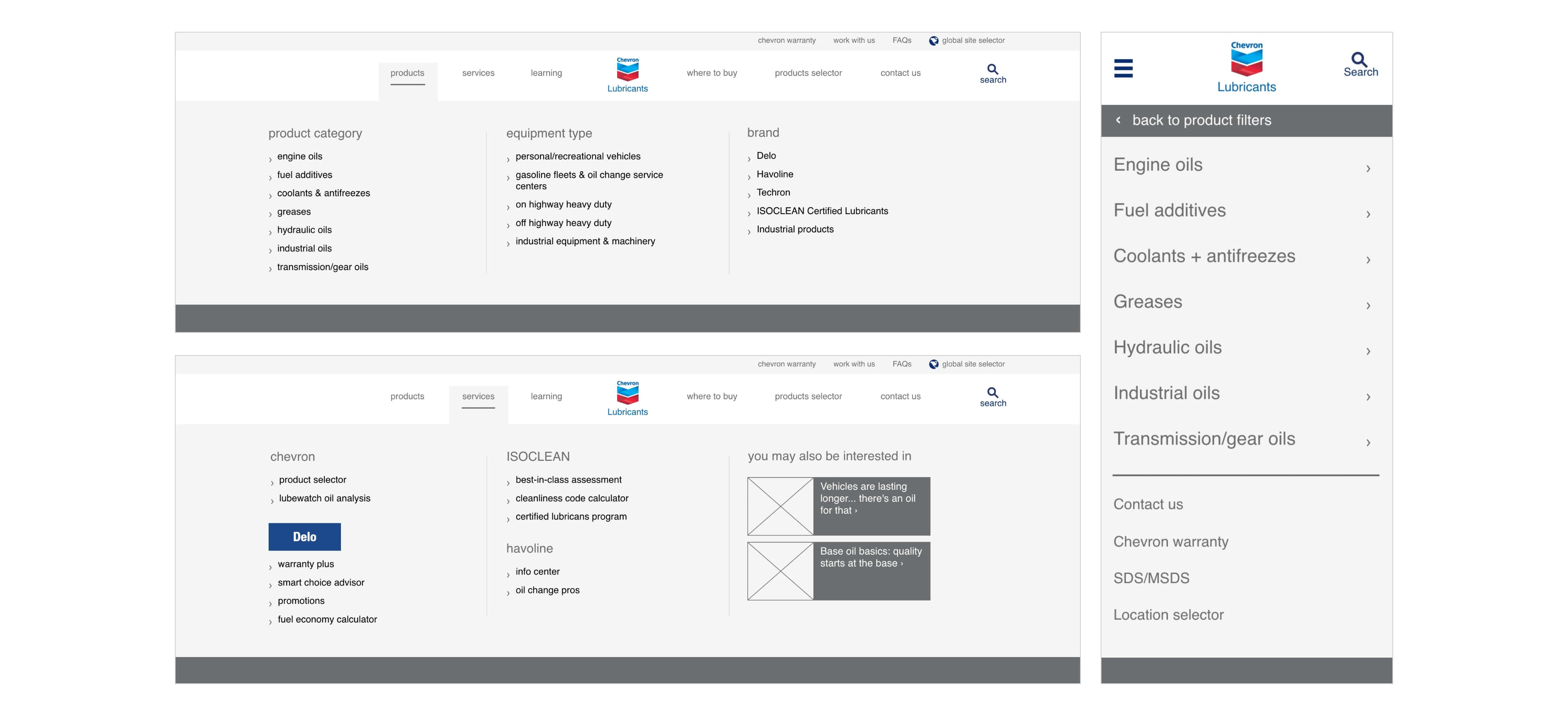
- Remove layer four links from the menu. These pages can be navigated to via the third layer pages. This decreases the amount of options available by eliminating extraneous links, increasing scanibility and decreasing the perceived effort for a user trying to accomplish a singular goal on the website—all while ensuring users understand broadly what content is available to them.
- Organize links by brand so that headers are consistent, eliminating the need for users to relearn how the information is organized.
- Organizing by brand allowed us to remove the brand name from each link label so that the information-carrying words could be placed at the front of each link.
- Remove individual blog articles from the primary navigation and instead provide links to a handful of overarching topics.