Digital Ecosystem
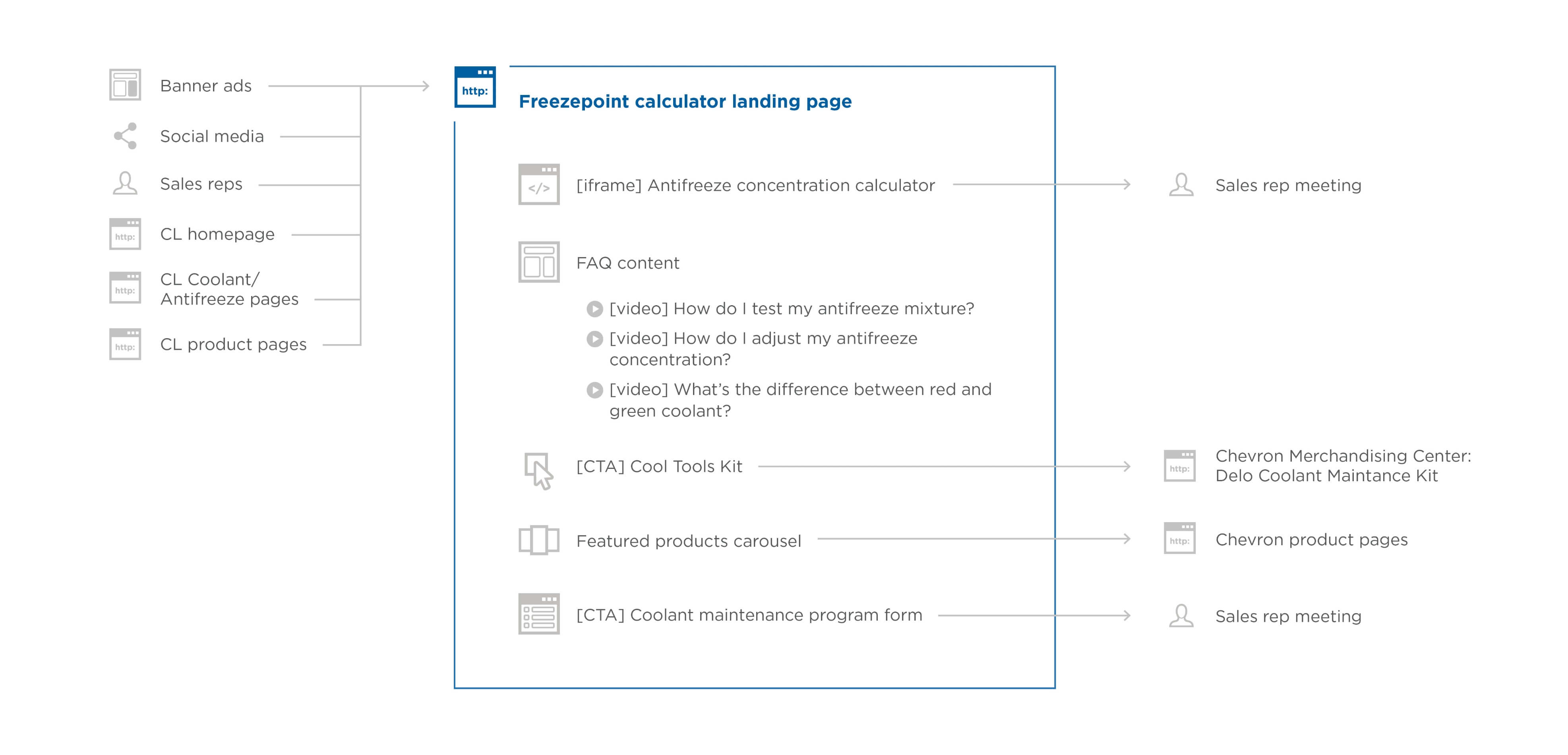
Before jumping into user flows, we needed to understand the ecosystem in which the tool resided in order to craft a consistent experience across all touchpoints, eliminate repetetiveness, and ensure the tool delivered what the messaging said it would. In stakeholder interviews, I uncovered the business goals and the larger persuasion strategy intended to lead a prospect from awareness to purchase that enabled me to create a tool that both helps the user while providing marketing value for Chevron. The first step was mapping the ecosystem.
User Flows
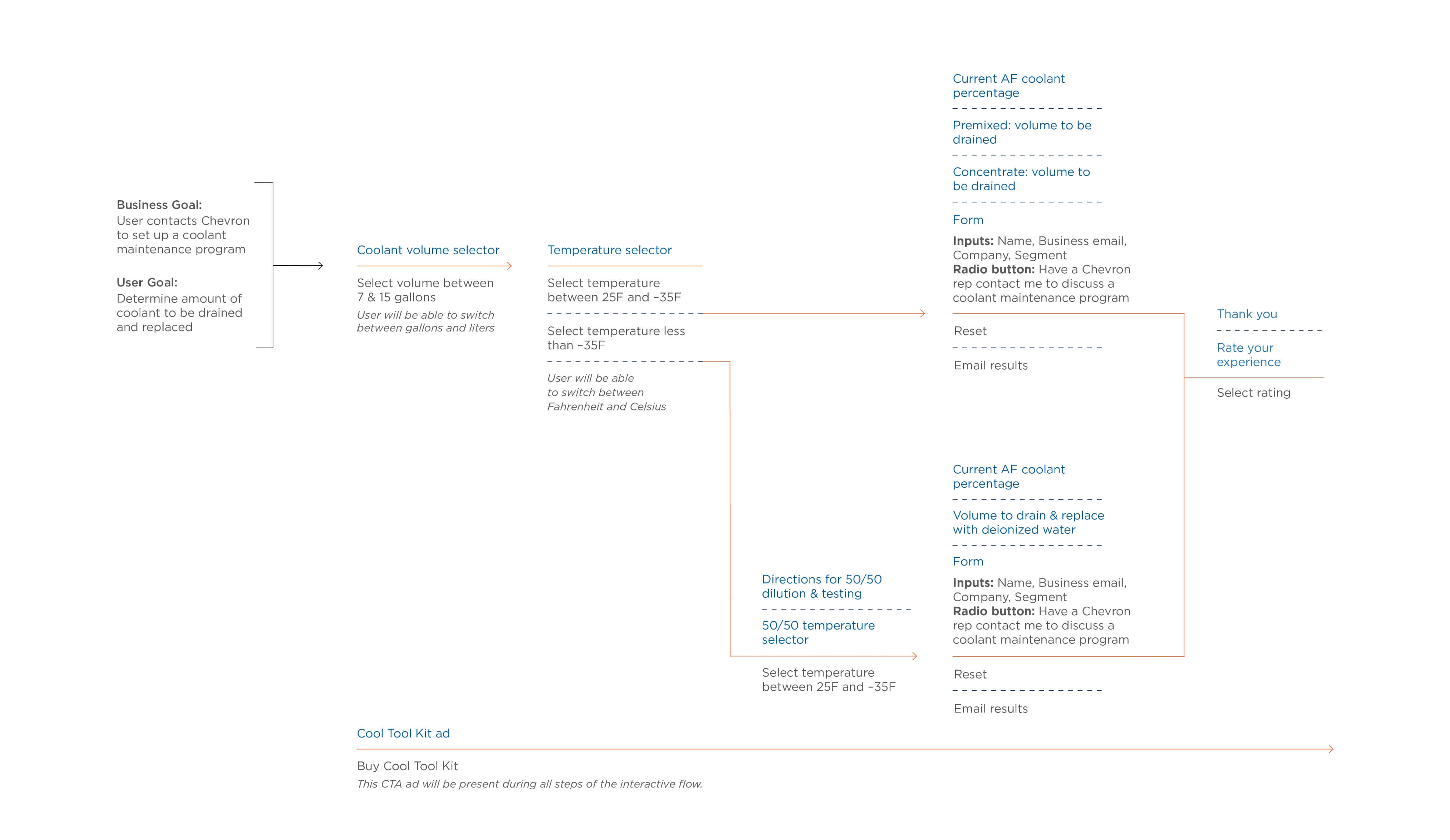
Equipped with the business goals the tool was a part of accomplishing, I then interviewed Chevron's subject matter expert to learn the logistics, motivations, and pain points surrounding the typical experience operators have when checking and adjusting their antifreeze concentration and moved on to creating a user flow.
While sometimes you have enough information to create a user flow in context of a screen, in this particular case it was necessary to create a flow agnostic of screens to first focus on the features of the tool and ensure we captured the complex nature of the calculations in the simplest way possible.
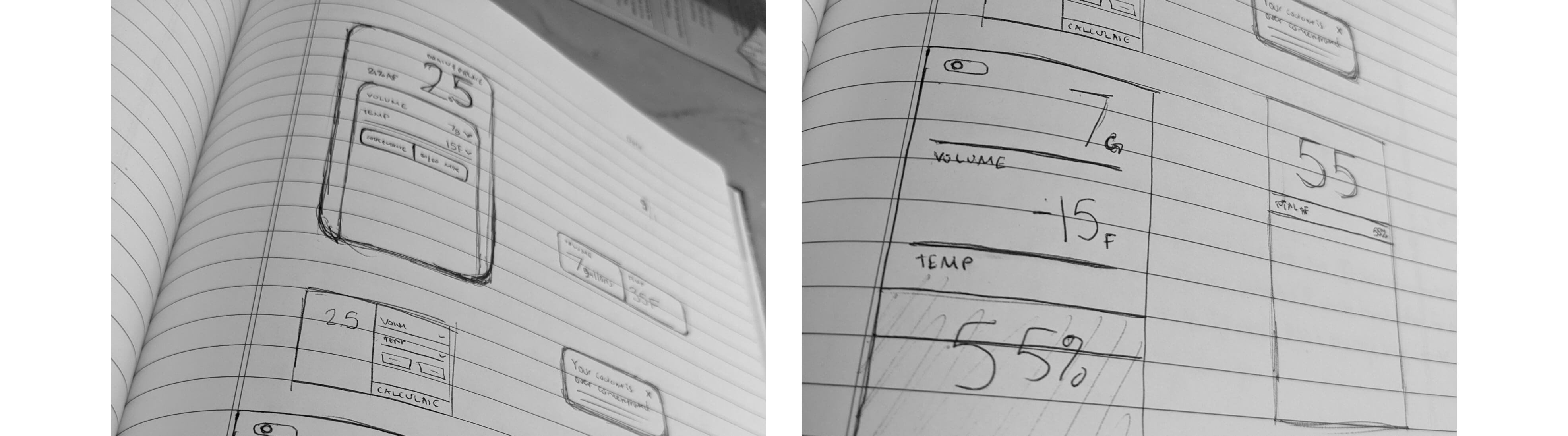
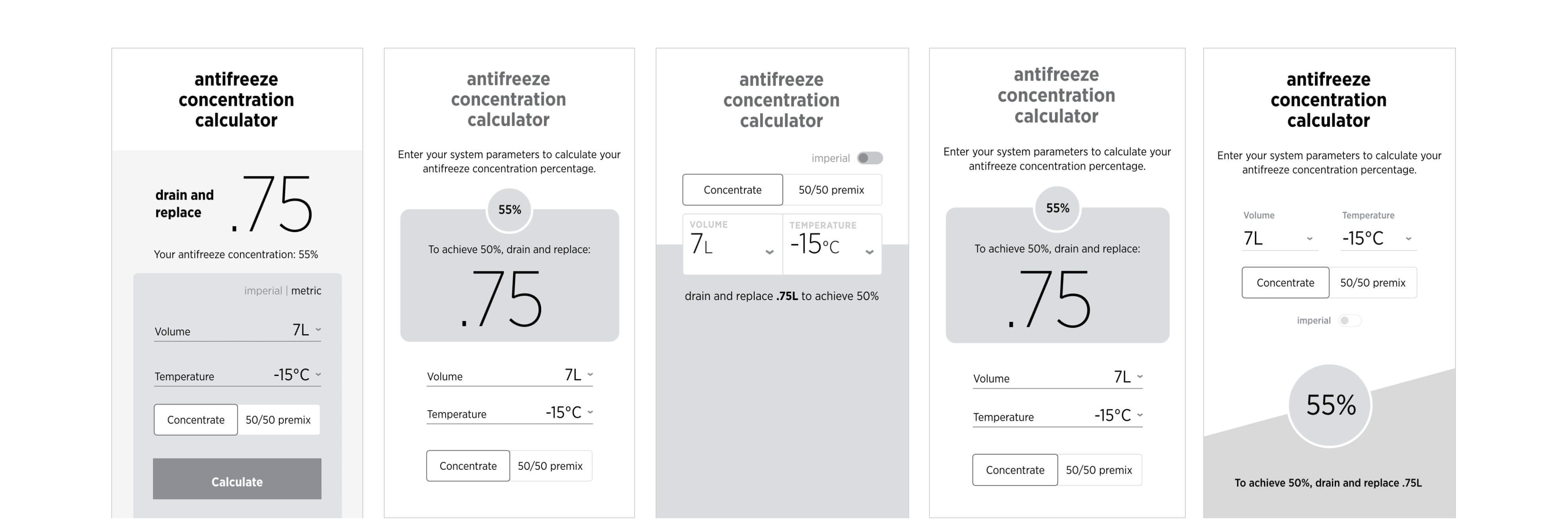
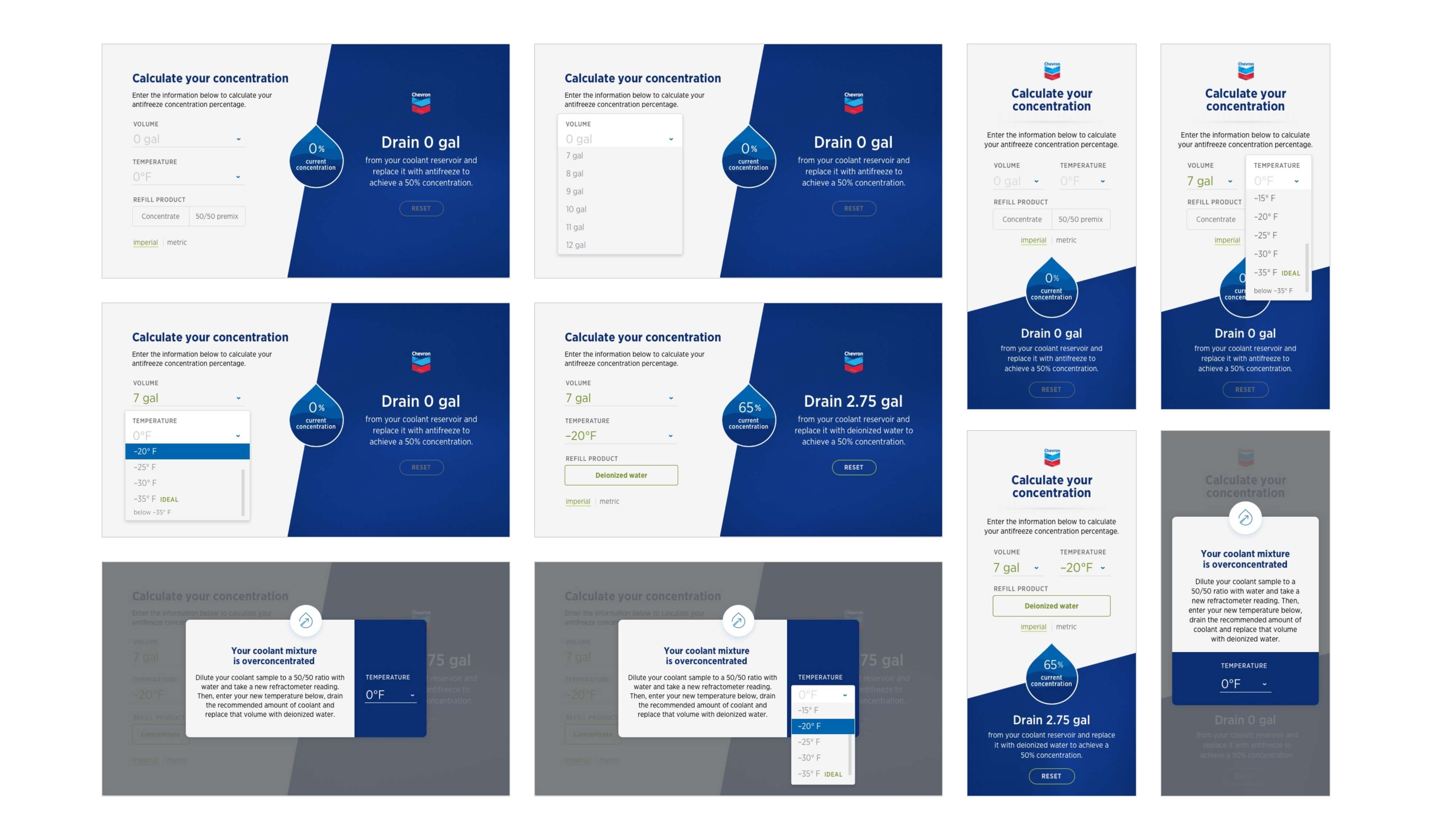
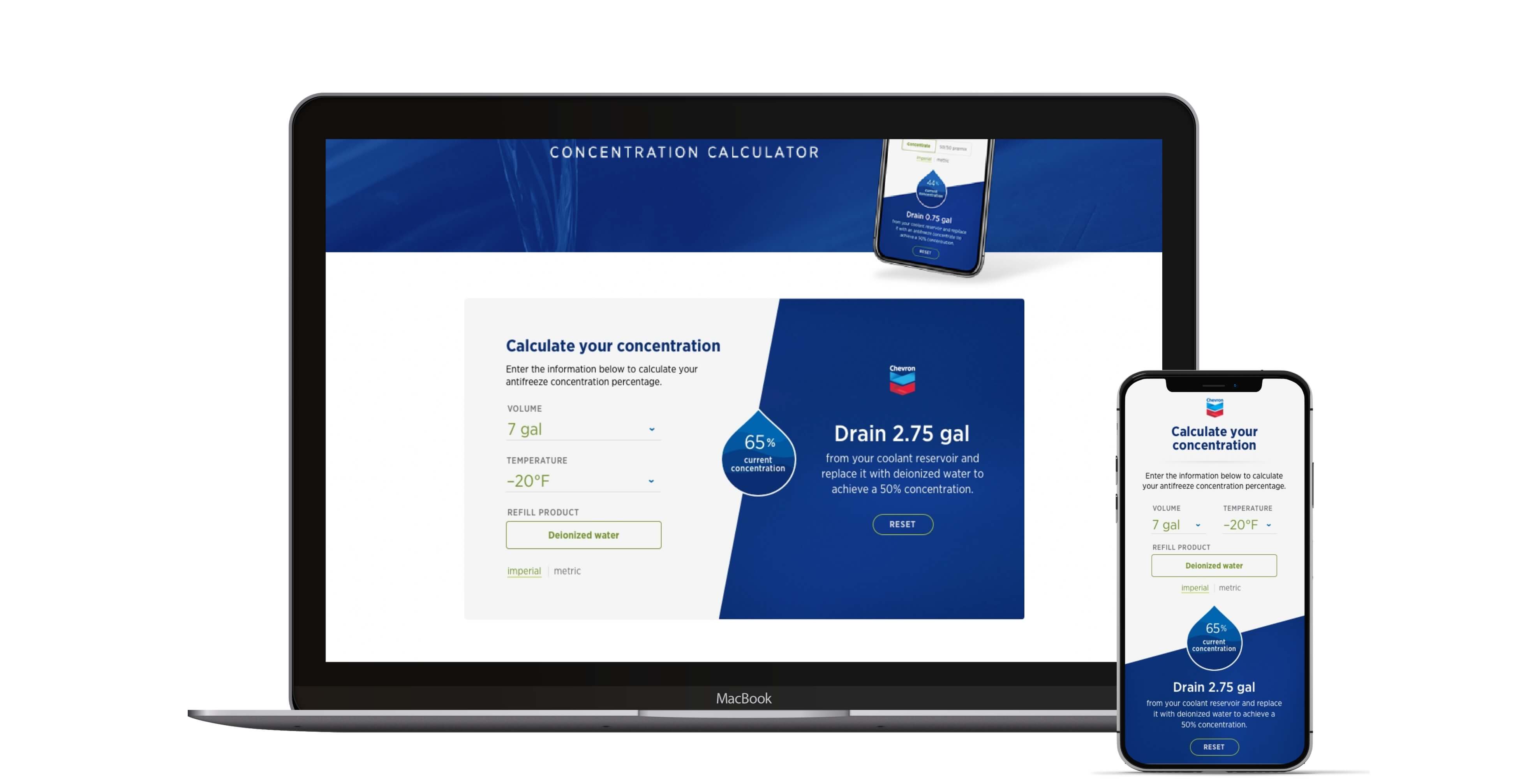
Sketches, wireframes, and UI
Having done the requisite discovery and strategy work to understand the requirements, wireframing came naturally. Due to the complexity surrounding the inputs and variations required for the calculations, each step of the way we asked ourselves how we could simplify the interactions until we arrived at the solution that most effectively reduced the perceived and real complexity of the tool by:
- Grouping as much information as possible so that the user perceives less information and can easily follow the hierarchy
- Simplifying interactions
- Choosing the easiest and most usable design patterns for interactions
- Progressively displaying more interactions instead of showing them all at once