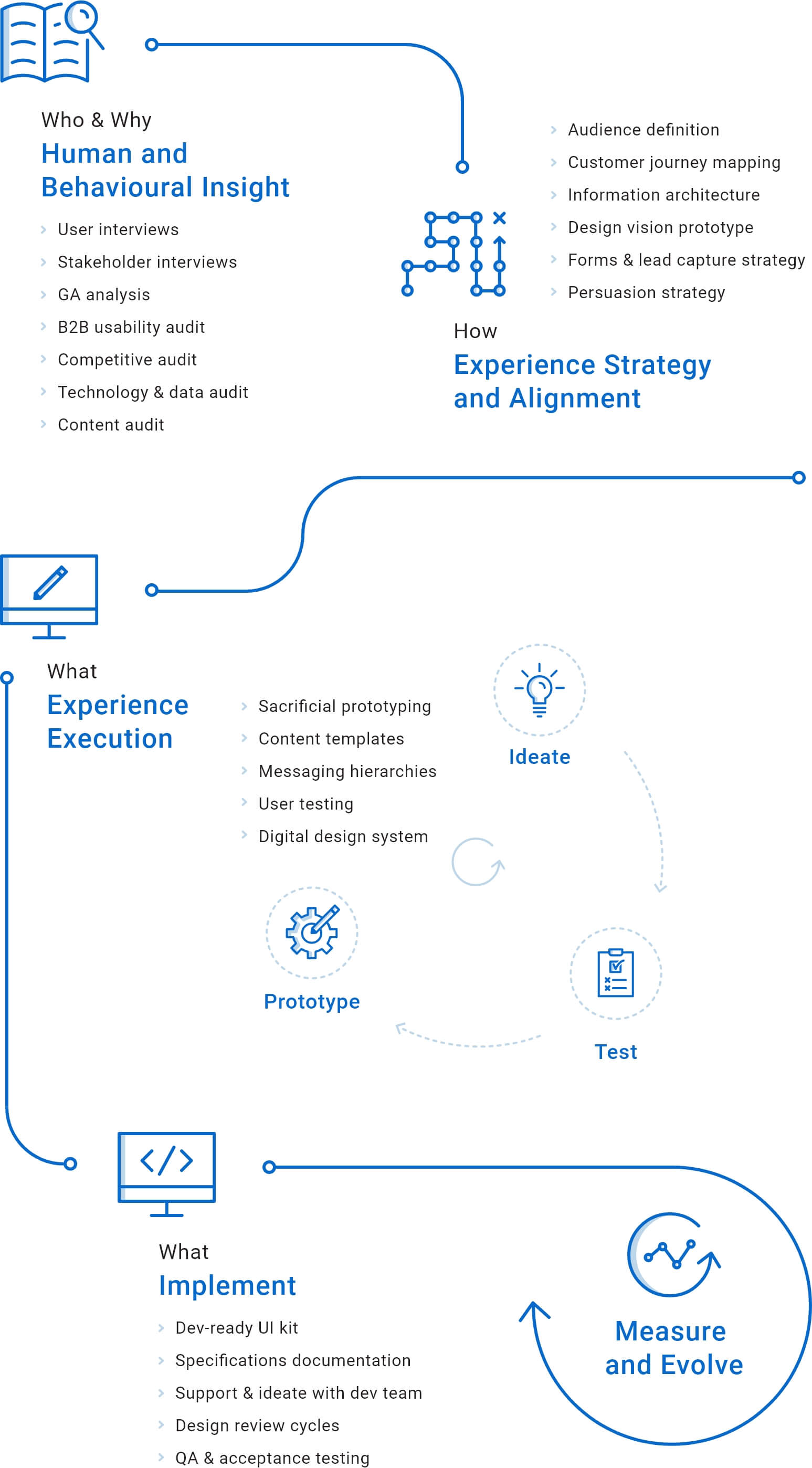

Discovery
Human-centred problem solving begins with deeply understanding the context

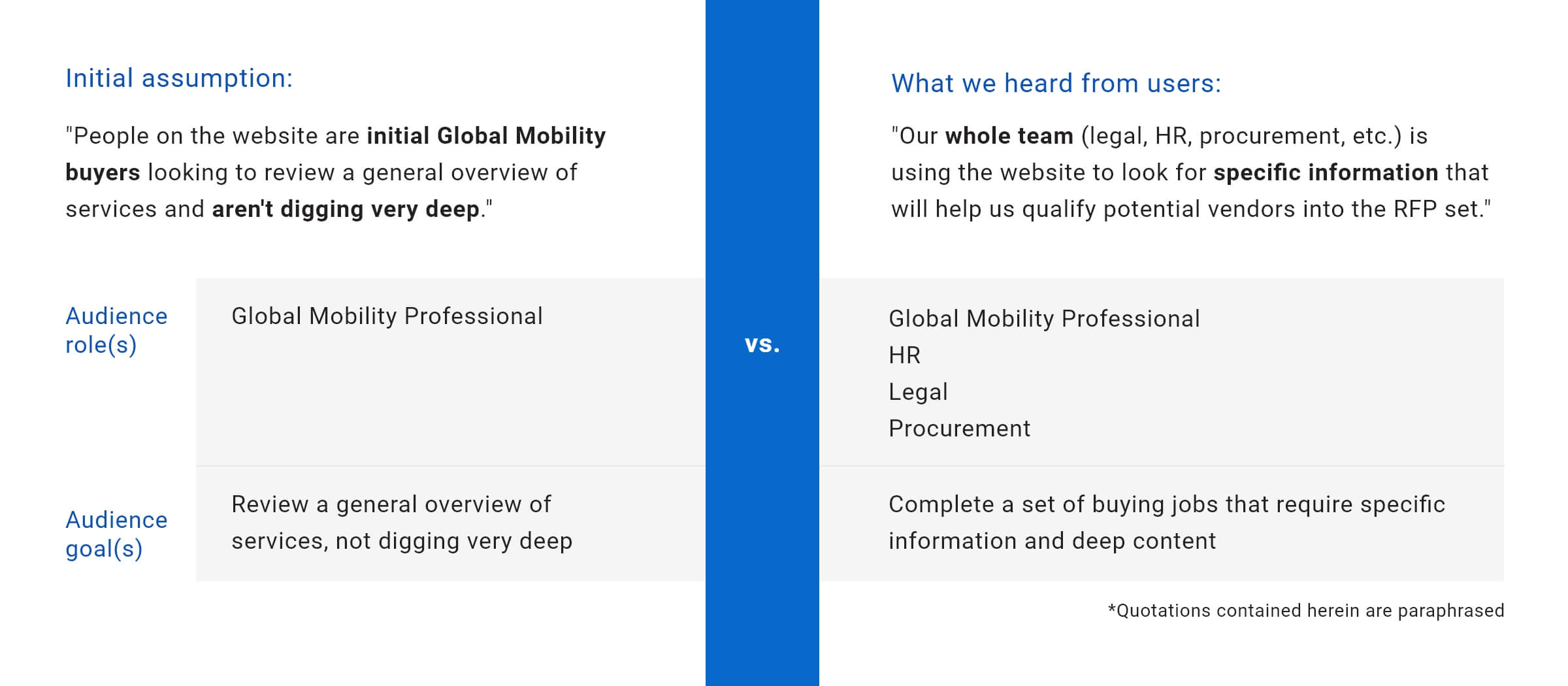
Ensuring an accurate understanding of our users
Our insight team (myself included) conducted stakeholder and user interviews to gain a deep understanding of prospect's needs, motivations and fuller life context in order to equip ourselves with the necessary criteria to continually measure our decisions against.
Graebel is exceptionally in tune with their customers, but a few inconsistencies were identified between stakeholder assumptions and real customer feedback. Taking these inconsistencies back to Graebel to discuss their implications resulted in strategic direction changes they weren't expecting, but were delighted to find— deepening their affinity for the human-centred design process.
Providing business value with new insights
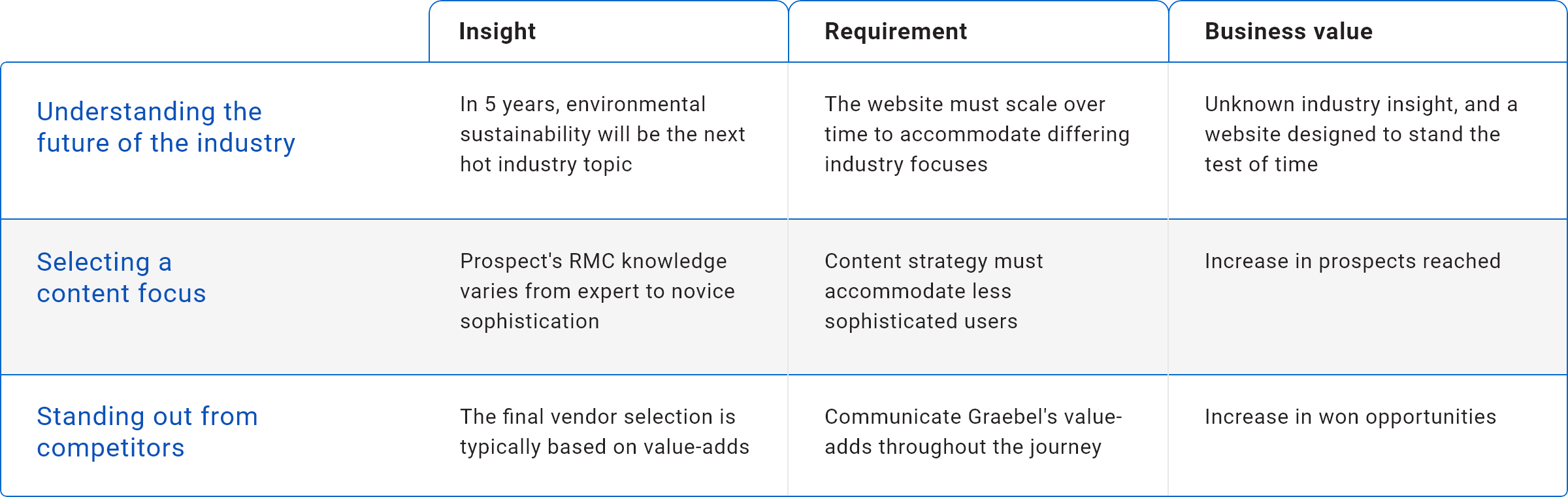
Our team uncovered a number of new insights we were able to report back to Graebel that had real business value including new industry insights, ways to ensure an increase in prospects reached as well as ways to win more business. Here are just a few:
Understanding where you fall in the competitive set
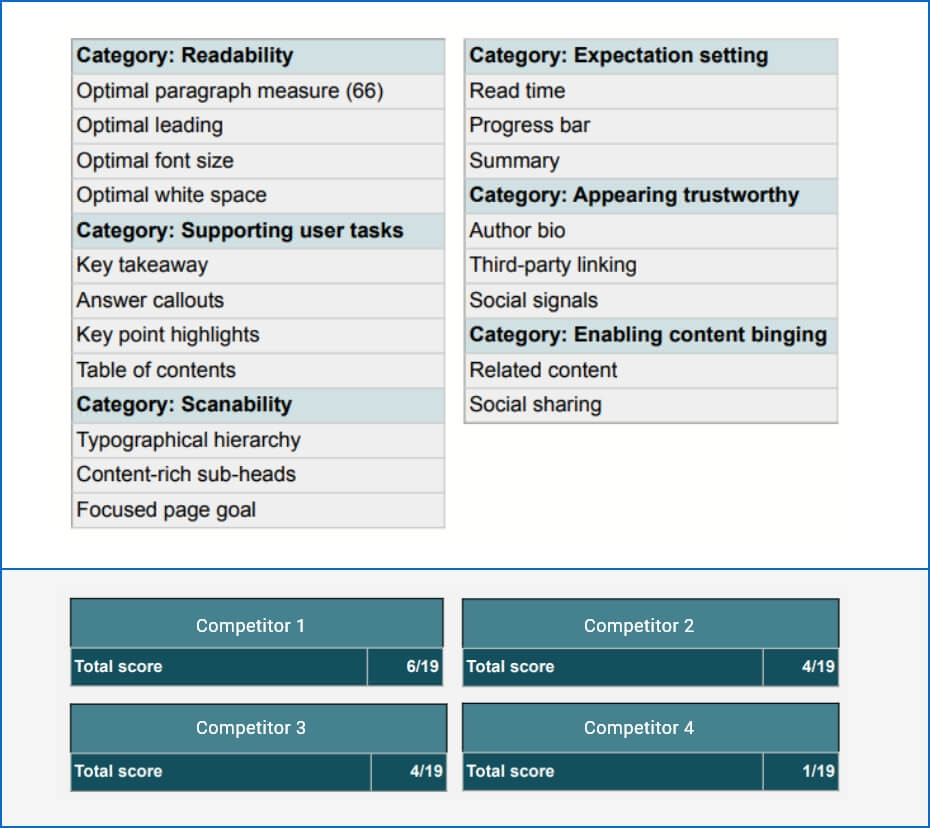
One of the most prevalent jobs throughout the buying process for users is to perform one-to-one comparisons of potential vendors. Often times, a prospect's own job can rely on selecting the right vendor and so the pressure is high. As one of those vendors, understanding your relative position to competitors across multiple dimensions is valuable for communicating and demonstrating superiority. The UX Competitive Audit had the following objectives:
Close experience gaps
What experience components do competitors have that Graebel doesn't?
Leapfrog competitors
What experience components can Graebel offer that no competitors have?
Enable B2B purchaser goals
How can the experience better help prospects complete their buying jobs?

Strategy
Setting up the foundations for success informed by real insight

Audience definition and journey mapping
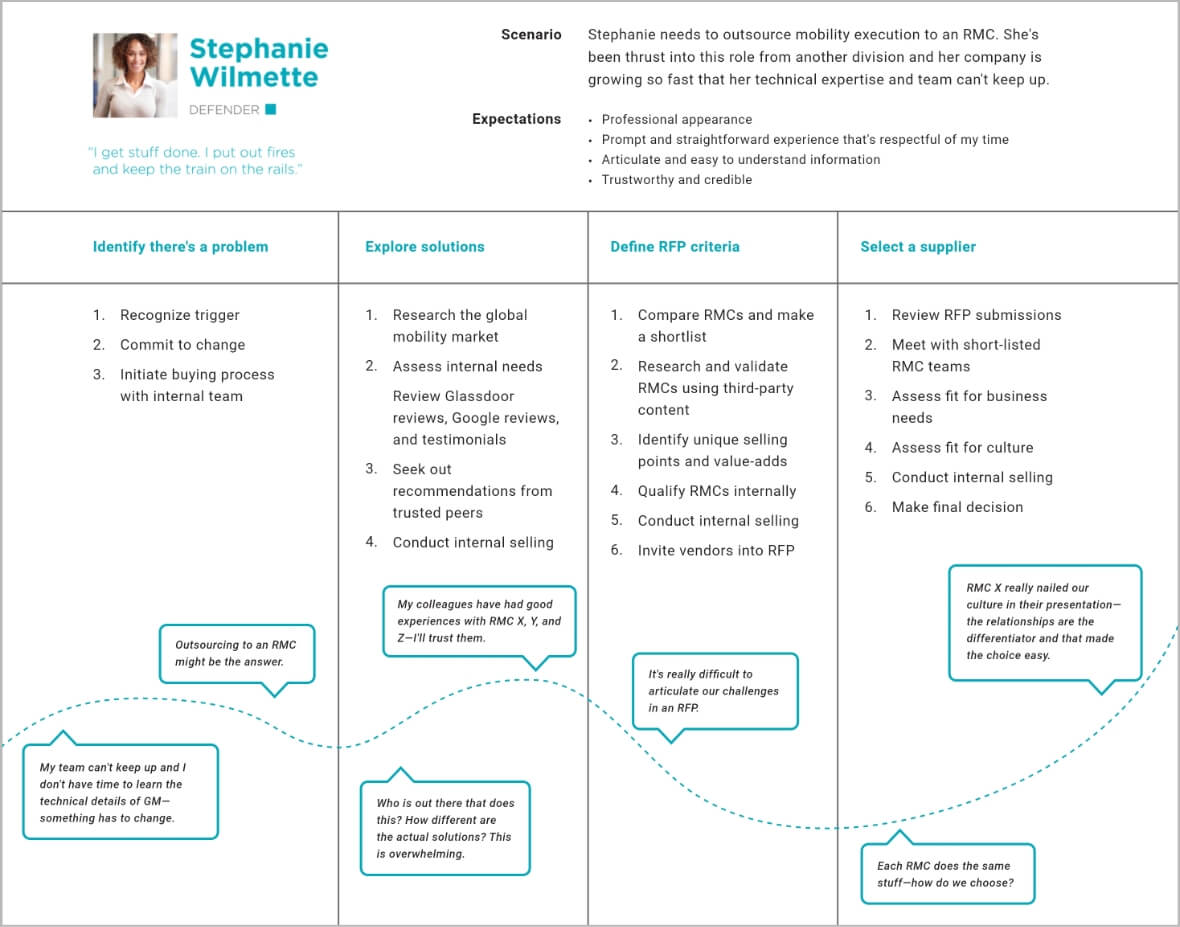
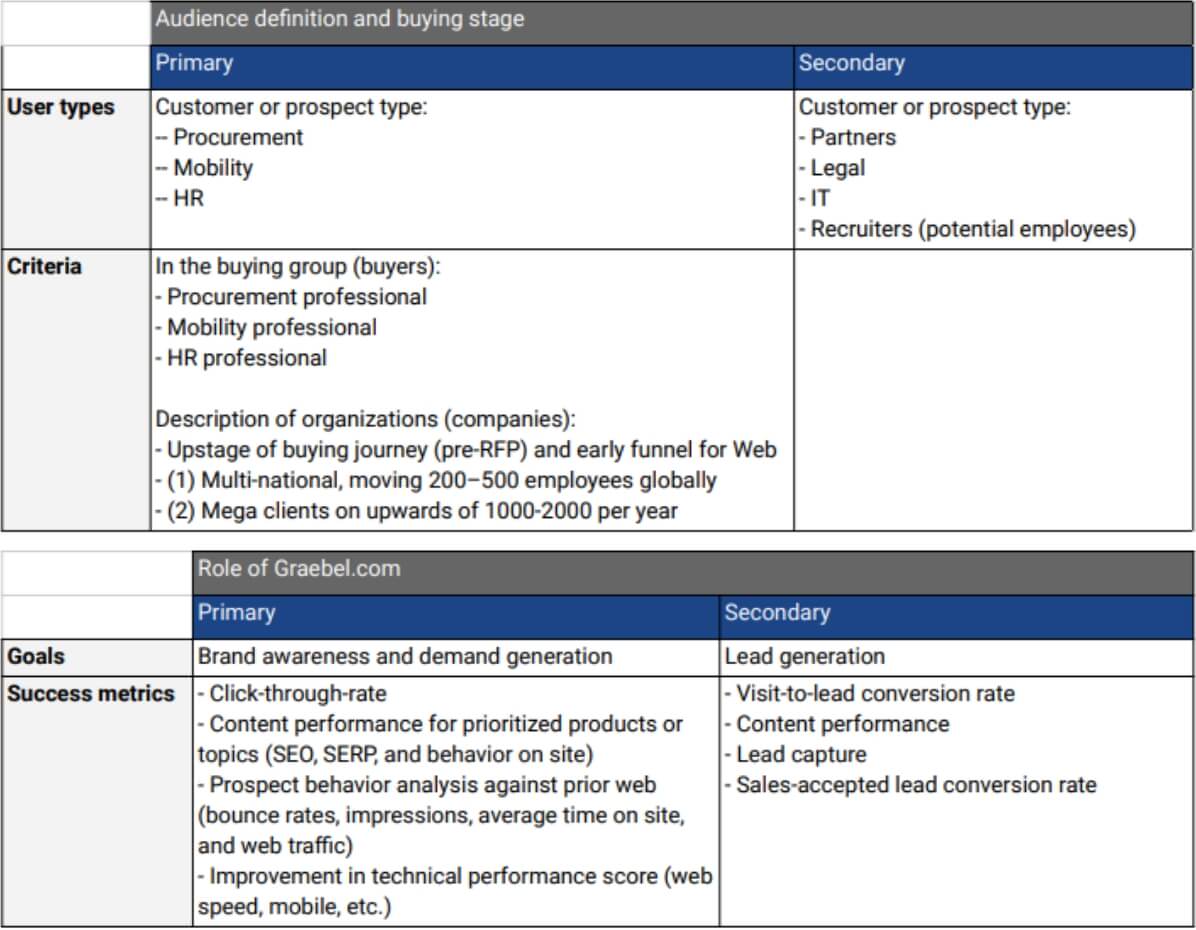
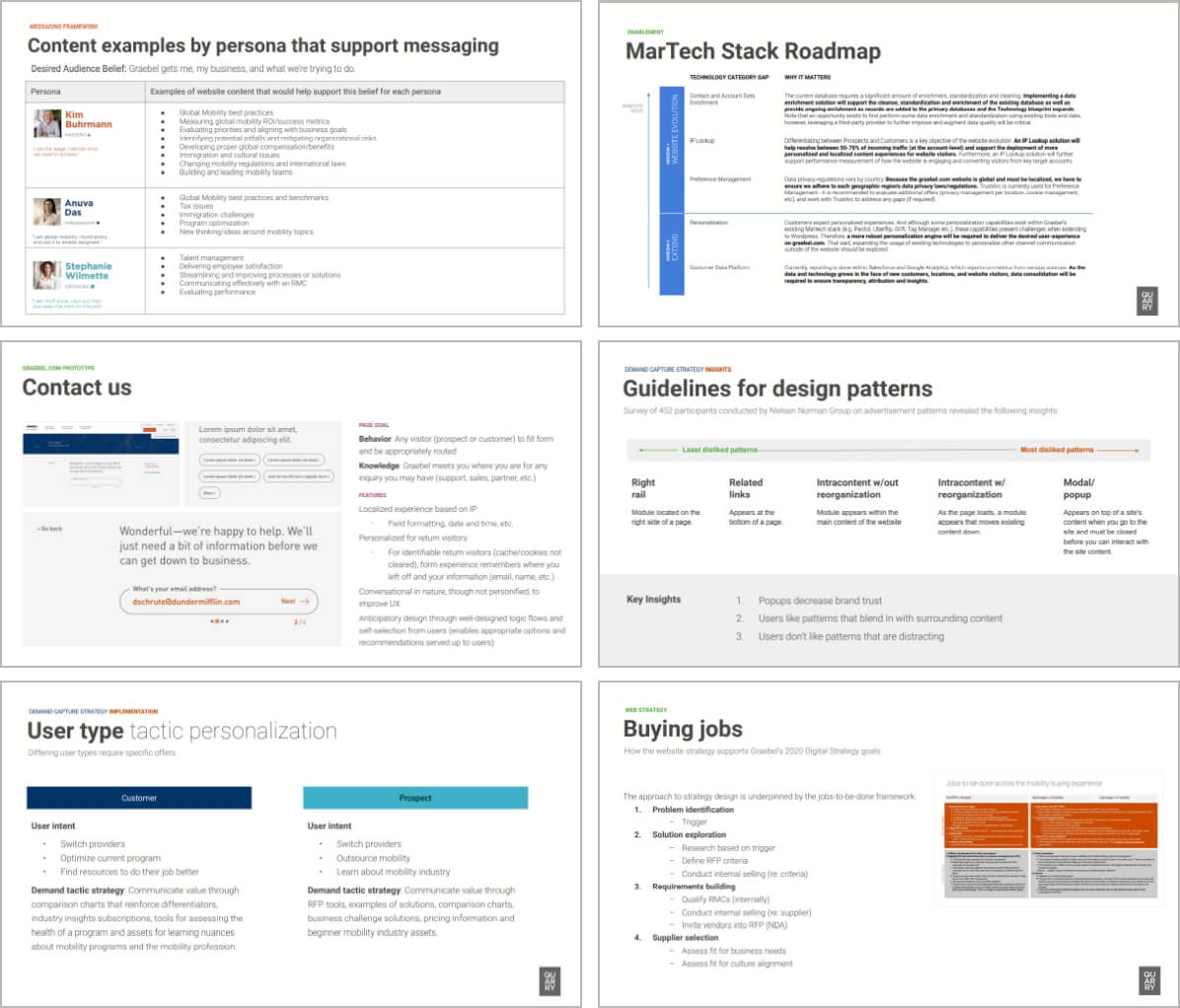
To ensure each decision about the site was informed by the insight we discovered, we created a few artifacts that defined our audience and their goals, needs, and tasks to align our team and the client around the job the website needed to do.
Information architecture, content, & service mapping
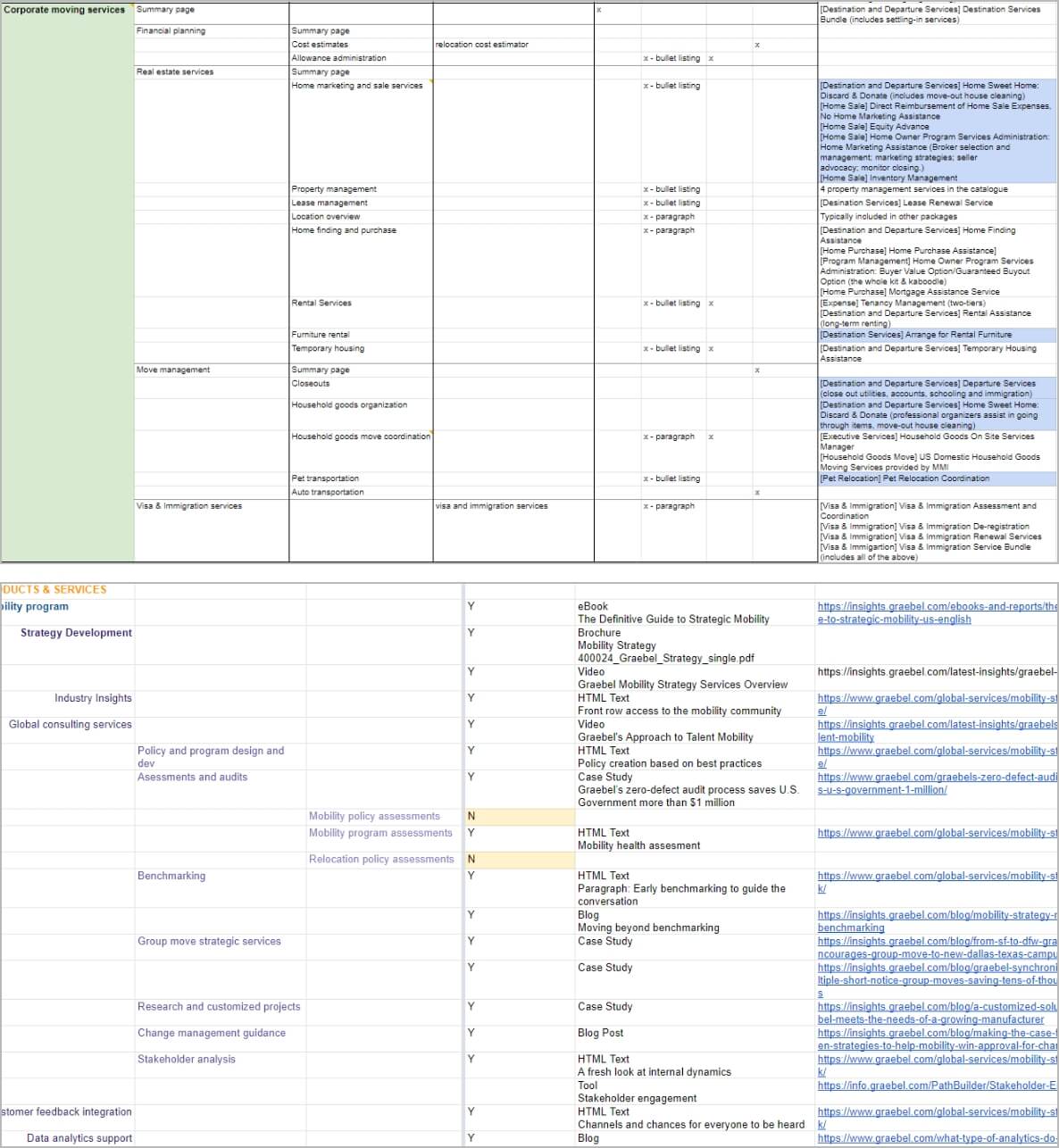
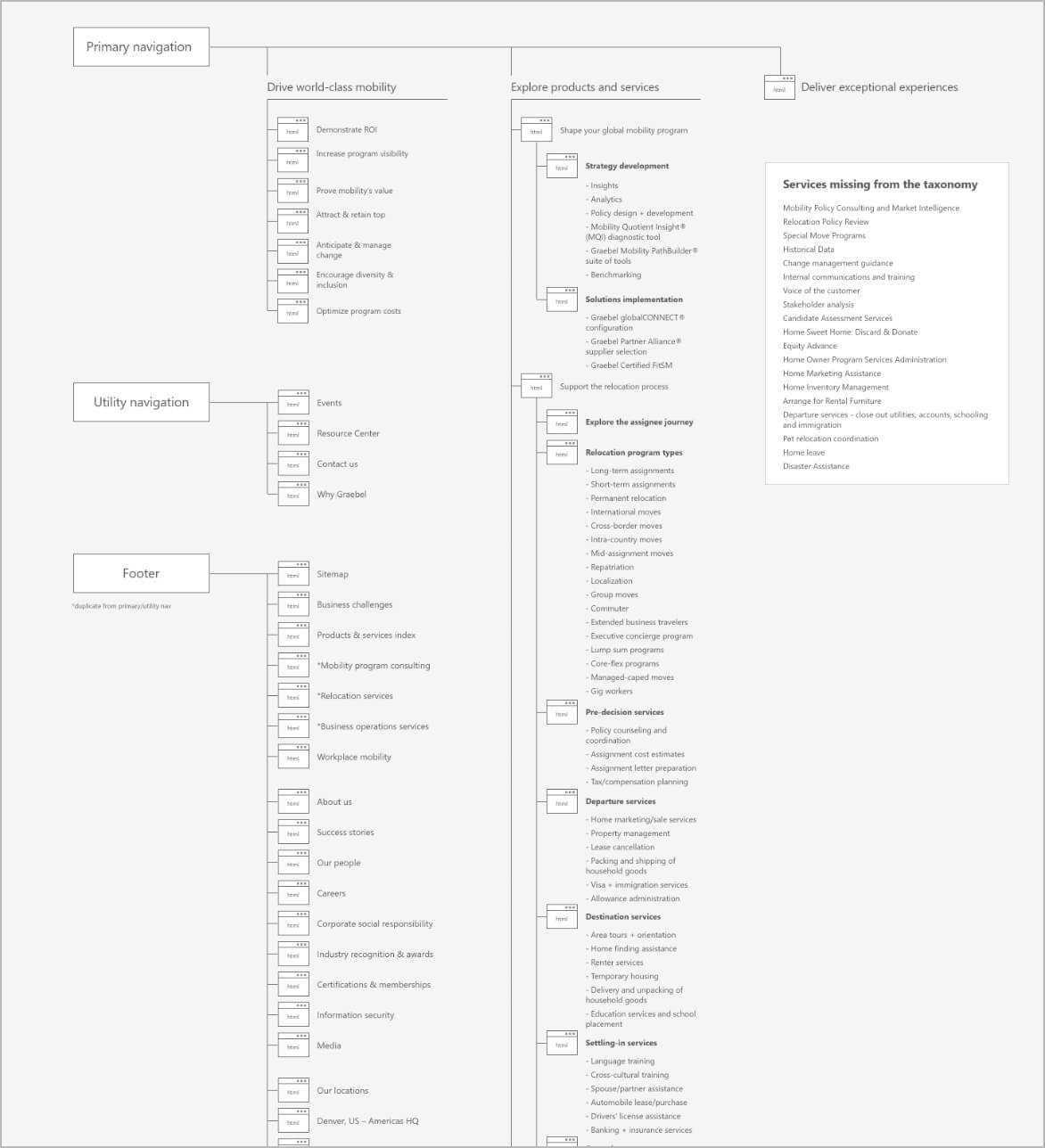
Having recently undergone a generalized service taxonomy exercise with our brand team, the information architecture activity was a matter of mapping all their discrete services to that taxonomy as well as figuring out how all the additional information available on the website fit into that structure.
Rallying around a future-state vision
We knew that we wouldn't be able to accomplish everything included in our strategy by day 1 launch of the site and that the build would need to be iterative over time. In order to keep our team—and Graebel's—focused on that ideal state that we would eventually evolve into, we created a tangible, sacrificial design vision prototype that demonstrated the strategy we were setting out so that Graebel could experience what they were agreeing to. The prototype serves as a guiding star, an interpretation of the strategy for every team member to rally around.
Interact with the live design vision prototype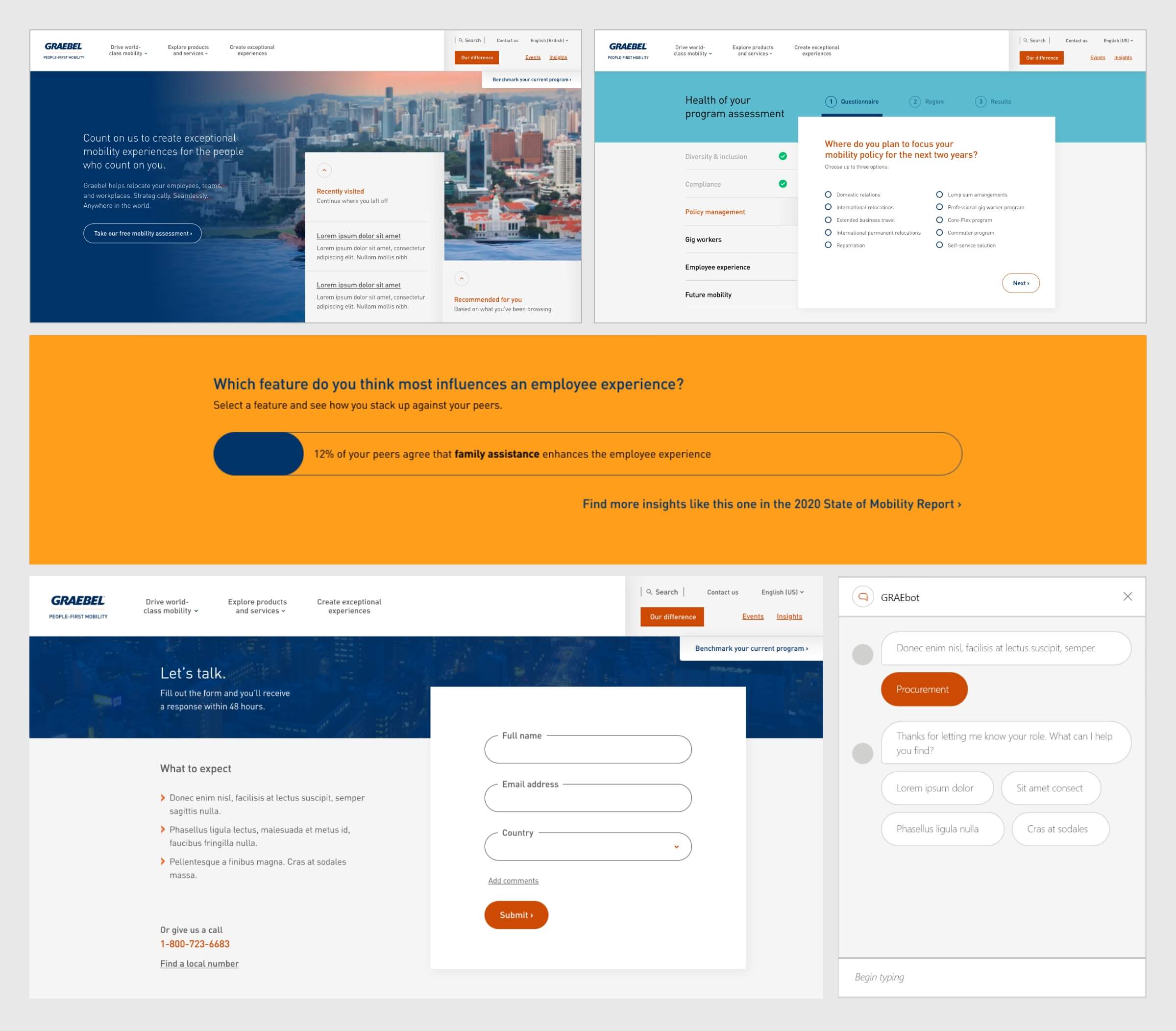
Combining discrete strategies into an implementation manual and roadmap
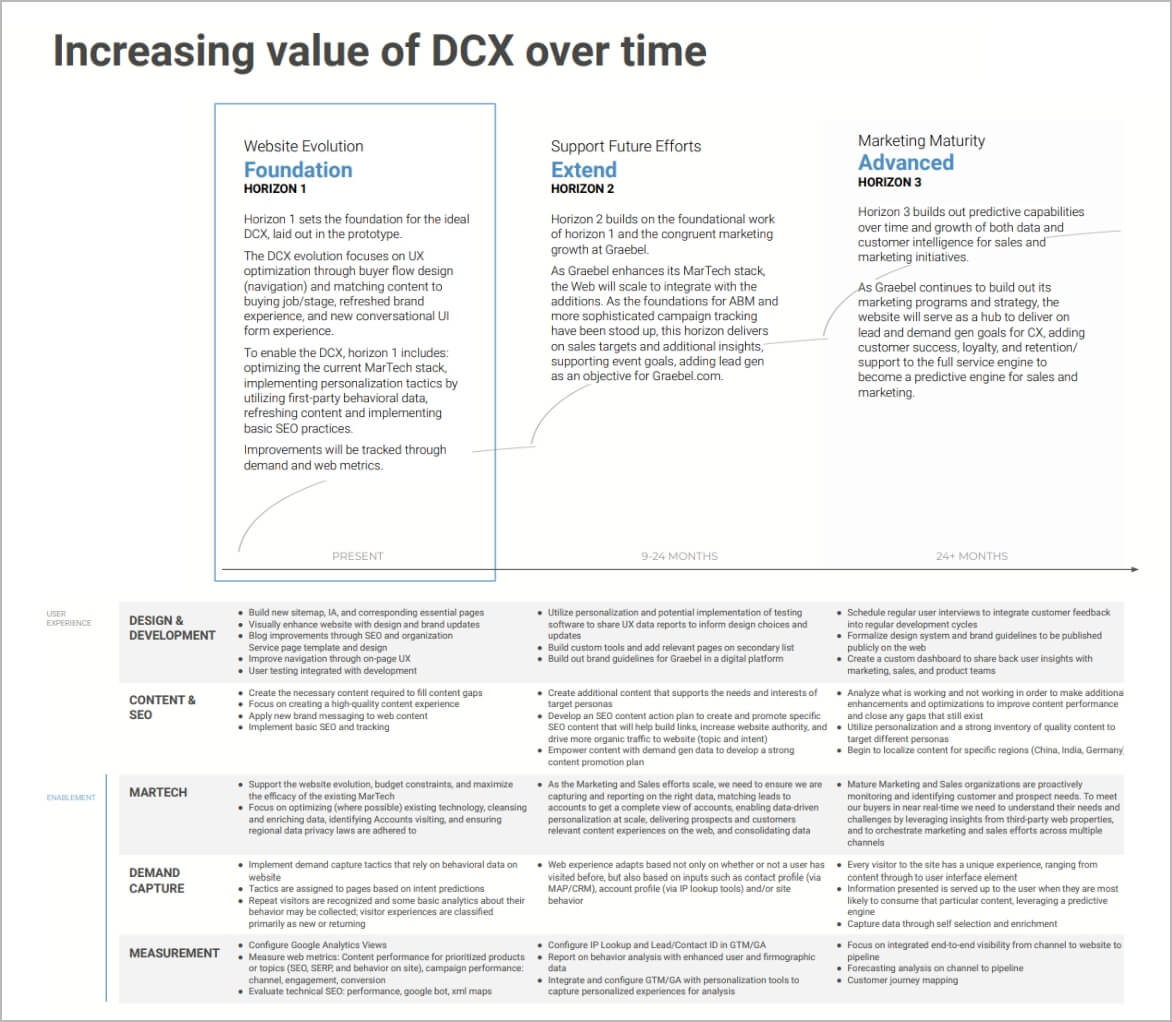
With the completion of the vision prototype and supporting strategies required to enable the vision, our team worked collaboratively to combine everything into a detailed implementation manual. Starting with our vision prototype, the team worked backwards to develop a roadmap for Graebel to make incremental and bite-sized progress towards the vision.

Design
Bringing the vision to life with a set of heuristics to weight decisions against

Turning strategy into meaningful and usable page designs
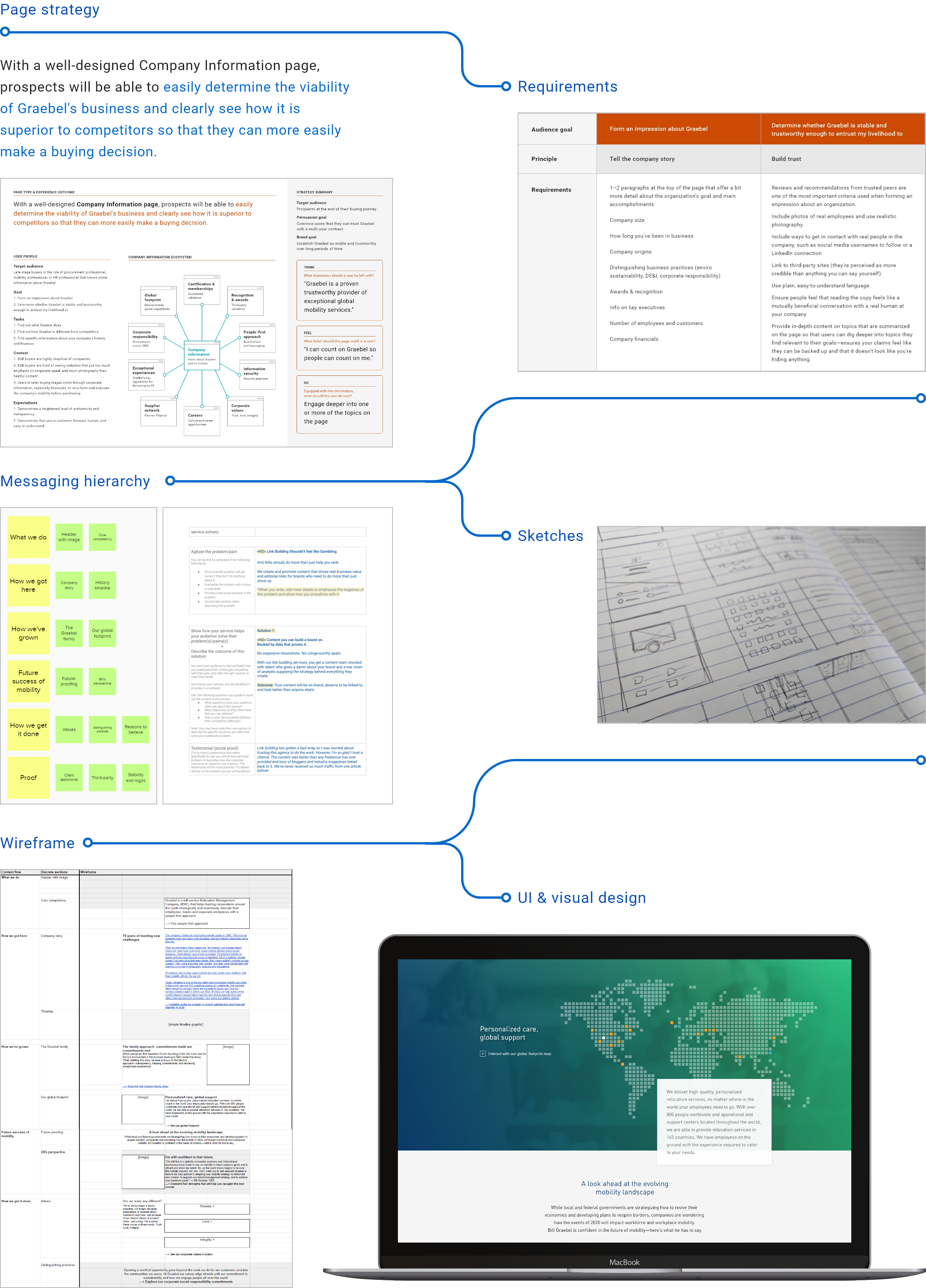
Aesthetics are incredibly important for first impressions and establishing a brand feel. However, if you only focus on aesthetics, the rest of the experience will fall flat. To ensure we were designing with the holistic user experience in mind, we began by defining strategies for each page in context of the larger goal, listing requirements, and translating them into messaging hierarchies—or story flows—before experimenting with any visual designs. Once we had a solid, strategic foundation we began designing wireframes.
Visit the fully interactive prototype